1.1. How Structure Determines Function
Introduction to Human Anatomy and Physiology
Human anatomy is the scientific study of the body’s structures—from microscopic components like cells and molecules to larger ones such as organs and tissues. These can be observed using microscopes or the naked eye. The term "anatomy" originates from Greek roots: ana (up/apart) and tomia (to cut), referencing its early foundations in dissection.
Today, modern imaging techniques like MRI and CT scans allow us to examine internal structures non-invasively, enhancing diagnostic precision and surgical planning.
Specializations in Anatomy
Anatomy is broadly categorized into:
- Gross (macroscopic) anatomy: Focuses on large structures visible without magnification (e.g., organs).
- Microscopic anatomy: Requires tools like microscopes to study cells and tissues. Includes:
- Cytology: Study of cells
- Histology: Study of tissues
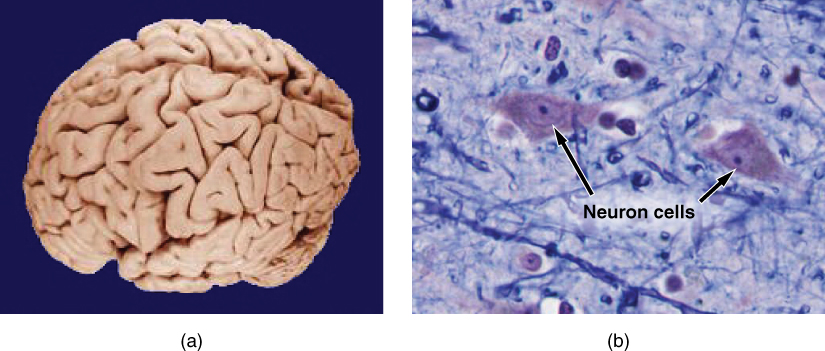
Credit: WriterHound/Wikimedia Commons, University of Michigan Medical School
Approaches to Studying Anatomy
There are two core methods:
- Regional anatomy: Examines structures in specific body areas, such as the abdomen or arm.
- Systemic anatomy: Studies entire systems, like the circulatory or nervous systems, across the body.
Anatomy and Physiology: Structure and Function
Anatomy explains what a structure is; physiology explains what it does. The two are inherently linked.
Physiology explores chemical and physical principles behind bodily function. A central theme is homeostasis—maintaining internal balance (e.g., temperature, pH).
Specializations in Physiology
Just like anatomy, physiology has branches. For example:
- Neurophysiology: Investigates brain and nervous system functions—from movement to molecular signals.
The Relationship Between Form and Function
Biological structures are shaped by their functions. Consider:
- The eyelid: A thin flap designed to protect and moisten the eye with rapid, coordinated movement.
- Proteins & molecules: At the cellular level, structure defines how components interact and support life processes.
Conclusion: Connecting Structure to Function
To fully appreciate human anatomy and physiology, always connect the form to its function. For example:
This integrated perspective will deepen your understanding and reveal how evolution has tailored our bodies for extraordinary capabilities.